AI Photo Colorization
Transform black and white photos into vibrant color images
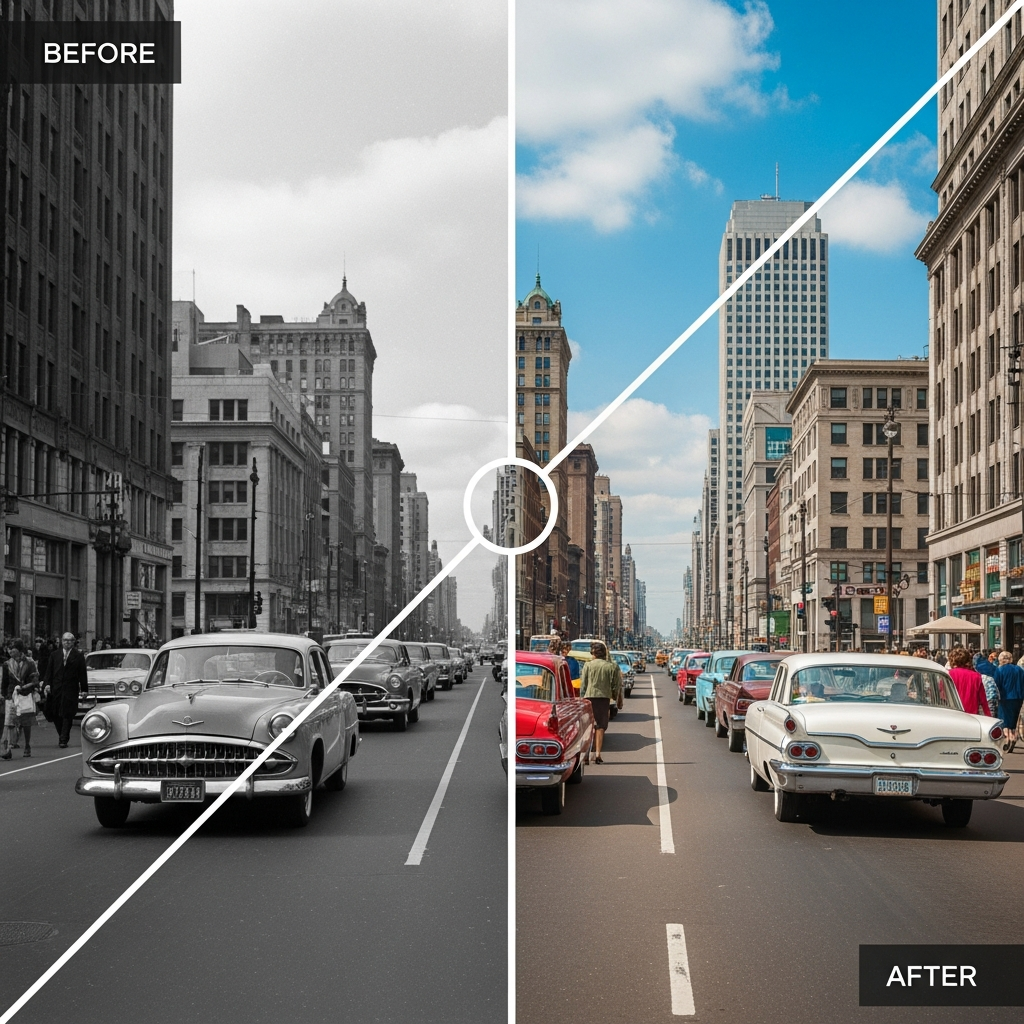
Convert your historical black and white photographs into stunning color images using AI that understands context, lighting, and realistic color palettes.
Edit
Make professional-level edits to any image — generated or captured — using simple natural-language instructions. Remove unwanted elements, intelligently crop, change the season, or perform just about any other type of edit you can put into words.
After

Before
Remix
Combine elements from between one and four images into new images. For example, merge a directory of photos of models with a directory of images of a new line of clothing, and update your online store to showcase your latest inventory in just minutes.


Historical Accuracy
AI considers historical context and period-appropriate colors for accurate colorization.
Natural Skin Tones
Advanced algorithms ensure realistic and natural-looking skin tones across different ethnicities.
Scene Understanding
Smart analysis of objects, clothing, and environments for contextually appropriate colors.
Bring Black and White Family Photos to Life
Black and white photos feel distant and historical. You can't see what color your grandmother's dress was, or what your childhood home actually looked like.
AI colorization analyzes historical context—a 1940s military uniform receives period-accurate colors, a 1960s kitchen gets era-appropriate tones. Skin tones adapt to lighting conditions. Fabric textures influence whether clothing receives matte or glossy treatment. The result: historically plausible colors that make old photos feel immediate and relatable.
Michael digitized his grandfather's WWII collection—28 black and white images from France. After colorization, his teenage son spent an hour studying photos he'd previously ignored, asking about the colored unit patches and landscape details. Adding dimension transformed archival images into conversation starters, helping a new generation connect with family history.
When colorization isn't right: If you're preserving photos for historical archives or academic documentation, adding color introduces interpretation. Museums prefer original monochrome versions as factual records. Colorize for emotional connection and family engagement, but keep original scans for documentary accuracy.
Start with a portrait to see how color reveals personality in faces you recognize but never saw in living color.